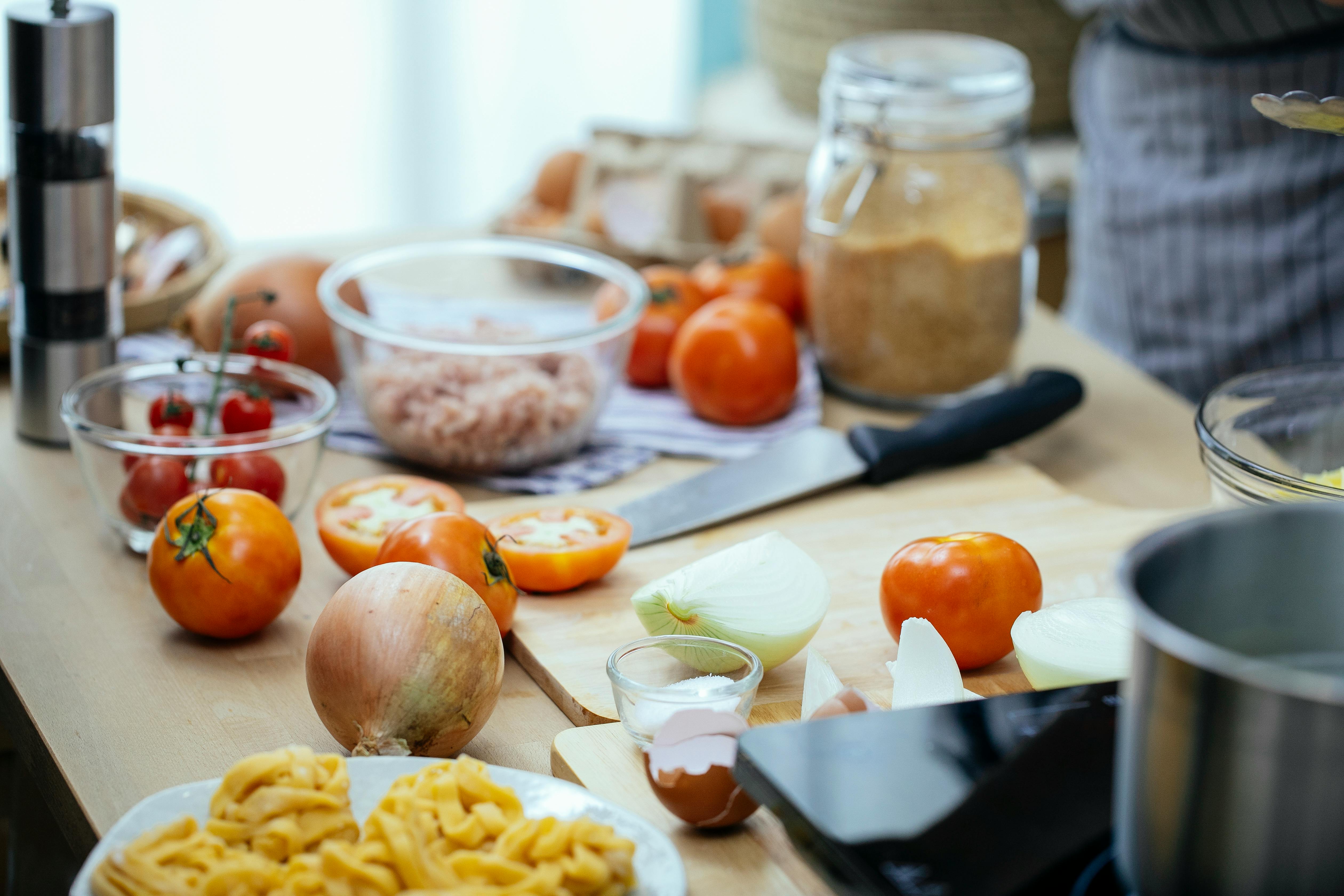
Batch Cooking 2.0: The Modular Strategy to Cook Once and Eat Three Different Meals
In the architectural hierarchy of solo living, the kitchen serves as either a source of chronic friction or a high-efficiency laboratory for biological optimization. For the independent professional, the traditional "meal prep" model—characterized by the Sunday evening production of five identical containers of chicken, broccoli, and brown rice—is a logistical and psychological failure. This legacy approach ignores the fundamental human requirement for Sensory Novelty and inevitably leads to what we term the "Tupperware Rut."
This super-pillar article introduces Batch Cooking 2.0, a proprietary system of Modular Culinary Engineering (MCE). By decoupling "Core Components" from "Cultural Flavor Profiles," we can minimize active heat-time while maximizing organoleptic diversity. We will analyze the thermodynamics of protein sequestration, the molecular biology of starch retrogradation, and the logistical protocols required to turn a single 120-minute prep session into a week of 5-star diversity.

The physics of high-heat searing and fluid dynamics in a professional solo kitchen
1. The Death of the 'Tupperware Rut': Deconstructing Sensory Monotony
The primary cause of failure in healthy solo living is not a lack of willpower, but the onset of Sensory-Specific Satiety (SSS). SSS is a biological phenomenon where the perceived pleasantness of a specific food decreases while the pleasantness of uneaten foods remains high. When a solo professional preps five identical meals, they are effectively programming their brain to crave external, high-dopamine alternatives (delivery apps) by Wednesday afternoon.
Traditional meal prep treats food as a unit of fuel; Batch Cooking 2.0 treats food as a Modular Asset. The "Tupperware Rut" is a symptom of poor system design. It creates an environment where the individual suffers from Decision Fatigue not during the cooking phase, but during the consumption phase. When you are forced to eat the same flavor profile for the fourth time in 72 hours, your brain's reward centers go dark.
By understanding the psychology of the palate, we can engineer a kitchen workflow that prioritizes Flavor Shifting. The goal is not "pre-made meals," but "pre-ready components" that can be pivoted into Mediterranean, Asian, or Latin profiles in under five minutes. This system is the ultimate hedge against the $40 delivery app surge, providing high-tier nutrition with the psychological satisfaction of a freshly prepared, novel meal.
2. Modular Culinary Systems (MCS): The Engineering Theory
A Modular Culinary System (MCS) is built on the principle of Separation of Concerns. In software engineering, this means keeping data separate from logic. In the solo kitchen, it means keeping your "Core Macros" (Proteins and Starches) separate from your "Aromatic Overlays" (Sauces and Veggies).
The MCS Hierarchy:
- The Core Unit: Large-batch, neutrally seasoned proteins and starches.
- The Aromatic Pivot: Pre-prepped flavor bases (Soffritto, Mirepoix).
- The Lipid Overlay: High-quality fats and acids to "resuscitate" texture.
- The Kinetic Fresh: Raw, high-moisture vegetables managed via Salad Jar Engineering.
By preparing these modules individually, you eliminate the "Muddled Flavor" effect that occurs when a finished stew sits in the fridge for four days. Each night, you select one Core Unit and one Aromatic Pivot, combining them under high heat to create a meal that tastes as though it were just born in a professional kitchen. This is the foundation of Culinary Sovereignty.
3. Protein Sequestration & Maillard Kinetics: Roasting for Longevity
Protein is the most chemically volatile and expensive component of the solo diet. To batch-cook protein correctly, you must master Maillard Kinetics—the reaction between amino acids and reducing sugars that gives browned food its distinctive flavor. The challenge for the soloist is achieving this flavor in bulk without overcooking the interior of the meat.
The Reverse-Sear Protocol
When roasting a large batch of avian or bovine protein for the week, we utilize a low-temperature initial bake followed by a high-heat "shock."
- The Goal: Maximize moisture retention (Juiciness) while building a "Flavor Reservoir" on the skin.
- The Science: Cooking chicken breast to exactly 155°F (68°C) and holding it there for 50 seconds achieves the same pasteurization as the USDA recommended↗ 165°F but results in a 20% increase in water retention.
Once cooked, the protein is sequestered—sliced into uniform units and stored in airtight glass. By keeping the seasoning minimal (Salt, Pepper, Oil), you prevent the meat from being "locked" into a specific cuisine. Monday it is a salad topping; Tuesday it is the heart of a stir-fry; Wednesday it is the protein base for a gourmet pasta.
4. The Starch Reservoir: Analyzing Starch Retrogradation
Most people hate "leftover" rice or pasta because it becomes hard and dry. This is due to Starch Retrogradation—the process where amylose and amylopectin chains realign into a crystalline structure as they cool. In Batch Cooking 2.0, we use this chemistry to our advantage.
The Resistant Starch Edge
Retrograded starch (especially in rice and potatoes) becomes Resistant Starch, which acts as a prebiotic, feeding your gut microbiome and significantly lowering the glycemic index of the meal.
- Cooking for Reheating: Under-cook your grains by approximately 10%.
- The Moisture Lock: Store grains with a "Sacrificial Moisture Source"—a single damp paper towel or a slice of lemon—inside a borosilicate glass container.
When you reheat these grains in a hot skillet with a splash of water, the steam "shocks" the starch crystals back into a gelled state, resulting in a texture that is indistinguishable from fresh, but with superior metabolic benefits.
5. Aromatic Arbitrage: Building Cultural Flavor Pivots
The secret to variety in solo cooking is the Aromatic Base. You do not need to chop onions every night. Instead, use Aromatic Arbitrage—centralizing the labor of chopping and sautéing into one 20-minute window on Sunday.

A collection of raw, vibrant ingredients representing the potential for cultural flavor pivots
The Three Global Pivots:
- The Mediterranean Base: Onion, garlic, parsley, and lemon zest.
- The Eastern Base: Ginger, scallion, garlic, and chili.
- The Latin Base: Onion, bell pepper, cilantro, and cumin.
By freezing these bases in oil (refer to our Freezer Staples guide), you have instant access to different cultural worlds. You simply drop a "Flavor Cube" into a pan, add your Core Unit (protein/starch), and within 180 seconds, you have a completely different meal than you had yesterday.
6. Sauce Engineering & Lipid Conductivity: The Resuscitation Phase
Reheated food often feels "dead." This is because the volatile flavor compounds have evaporated and the fats have solidified. Batch Cooking 2.0 solves this through Lipid Conductivity. Fats (oils and butters) are flavor carriers. By introducing a fresh "Lipid Overlay" during the reheating process, you create a vehicle that carries the Aromatic Pivot into the Core Unit.
The Emulsion Blueprint:
Never use a microwave to reheat modular components. Use a wide stainless steel or cast-iron skillet.
- Heat the Fat: Add 1 tsp of high-polyphenol olive oil (refer to the Mediterranean Mindset guide).
- Flash-Fry the Base: Add your cold protein/starch.
- The Deglaze: Add 2 tbsp of a high-acid liquid (lemon juice, white wine, or broth).
The resulting steam and fat create a Spontaneous Emulsion that coats the food, restoring its "Silky" mouthfeel and making it taste fresh-born.
7. The 'Warmed-Over Flavor' (WOF) Solution: Chemistry of Oxidation
Have you ever noticed that reheated meat has a metallic, "stale" taste? This is Warmed-Over Flavor (WOF). It is caused by the oxidation of polyunsaturated fatty acids in the cell membranes of the meat, catalyzed by iron.
To defeat WOF in your solo kitchen, you must use Antioxidant Barriers. Seasoning your batch-cooked protein with rosemary or sage isn't just for flavor; these herbs contain powerful antioxidants that slow the oxidation process. Additionally, storing your modular components in Borosilicate Glass↗ with minimal headspace reduces the oxygen available for the reaction. Understanding this chemistry allows you to prep on Sunday and still enjoy a clean, gourmet taste on Thursday.
8. Kinetic Storage & Atmospheric Control: The Hardware Audit
In the MCS, your containers are not just boxes; they are Atmospheric Control Units. High-performance solo living requires an investment in the correct hardware to prevent Moisture Migration.

High-density, organized storage systems that maintain the structural integrity of modular components
The Storage Protocol:
- Borosilicate Glass: Superior to plastic as it is non-porous and does not leach endocrine-disrupting chemicals.
- Vacuum Sequestration: For proteins that will be eaten after 72 hours, use a vacuum sealer to remove all air. This pauses the aging process entirely.
- The 'Dry' Zone: Never store raw veggies in the same container as cooked protein. The respiration of the vegetables creates moisture that ruins the Maillard crust of your meat.
9. The Sunday Protocol: A 120-Minute Logistical Blueprint
The goal of the Sunday session is Maximum Throughput. We are not "cooking a meal"; we are "managing an assembly line."
- 00-20 Min: Mise-en-place. Chop all Aromatic Bases.
- 20-40 Min: High-Heat Action. Roast the large-batch proteins and start the Starch Reservoir.
- 40-80 Min: Passive Heat. While the core units roast, sauté your Aromatic Pivots and portion them into trays.
- 80-100 Min: The Cooling Phase. Spread grains on a flat sheet to cool rapidly (this prevents bacterial growth and improves retrogradation).
- 100-120 Min: Sequestration. Pack the modules into their respective Atmospheric Control Units.
By the end of this 2-hour window, you have effectively "Pre-Decided" your entire week's nutrition, earning you back 5-7 hours of cumulative time during your high-focus work days.
10. The Sovereign Table: The Psychology of Plating
The final stage of Batch Cooking 2.0 is the Consumption Ritual. When you live solo, there is a temptation to eat directly from the container or the pan. This is a failure of Self-Governance.

A perfectly plated solo meal, demonstrating that high-efficiency prep does not mean a compromise in luxury
Your modular meal, though prepped days ago, should be plated with the precision of a Michelin-starred restaurant. Use your best heavy ceramics. Add a final garnish of fresh herbs or high-tier sea salt. By treating your solo dinner as a "Sanctuary Event," you signal to your brain that your health and pleasure are priorities. This lowers cortisol, improves digestion, and reinforces the Sovereign Identity that is the core of SoloLife OS.
Final Thoughts: You are the Engineer of Your Palate
Efficiency does not have to mean monotony. By moving from "Meal Prep" to "Modular Systems," you reclaim your time, your health, and your joy. Do not be a victim of your own busy schedule. Build the modules. Master the pivots. Own the table.
Efficiency is the ultimate flavor.
The Spiderweb: Internal Connections
- *Automate your life further by mastering Decision Fatigue.*
- *Bridge the gap between fresh and long-term storage with Freezer Staples.*
- Learn the vertical order of fresh prep in our Salad Jar Engineering masterclass.
Authoritative references for this logistical manual include Harvard Health↗ and the culinary science of Serious Eats↗.