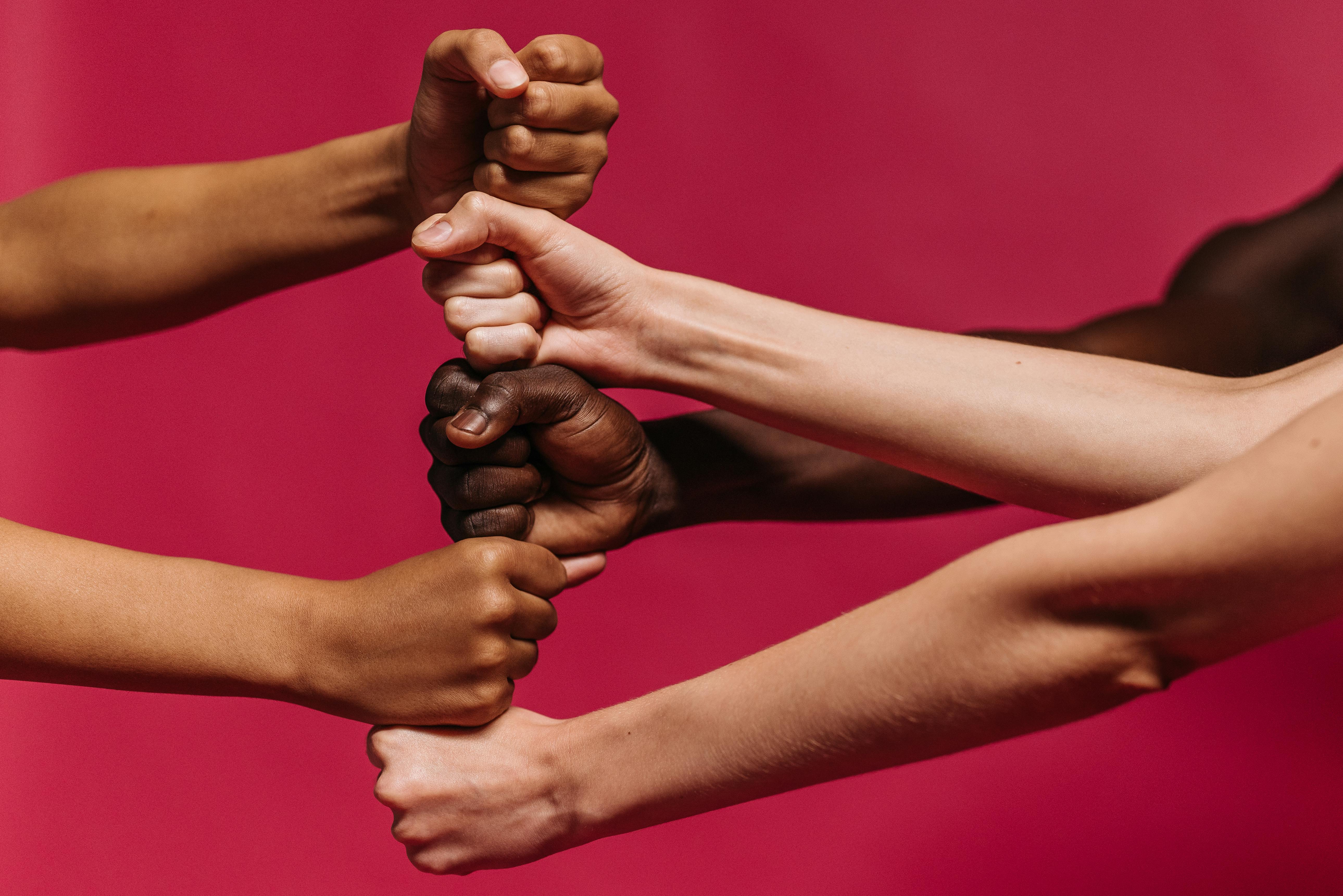
Social Fitness: The Architecture of Connection for the Sovereign Soloist
In the grand arc of human evolution, the concept of "Living Alone" is a radical, high-stakes departure from the biological status quo. For nearly 300,000 years, the survival of the human organism was tethered to the tight-knit cooperative of the Pleistocene tribe. To be isolated was, quite literally, a death sentence. Yet, in 2026, a growing class of high-performance professionals is choosing to architect their lives within the walls of a solo sanctuary.
The danger, however, lies in the conflation of Independence with Isolation. While the former is a state of radical self-governance and cognitive freedom, the latter is a biological toxin that accelerates cellular aging, degrades the prefrontal cortex, and initiates a systemic inflammatory response. This super-pillar article deconstructs the science of Social Fitness—a technical framework for engineering a deep support network that protects the soloist’s mental and physical longevity without compromising their autonomy. We will explore the neuroscience of ambient belonging, the sociology of "Third Spaces," and the logistical protocols required to build a "Sovereign Support Network" that functions with the precision of a modern operating system.

A high-performance soloist engaging in ambient social fitness at a modern urban cafe
1. The Biological Mandate of the Tribe: Evolutionary Costs of Isolation
The human brain is an expensive organ, consuming roughly 20% of the body's metabolic energy. A significant portion of this energy is dedicated to what evolutionary psychologists call the Social Brain Hypothesis. Our neural architecture—specifically the neocortex—expanded not to solve math problems or write code, but to navigate the complex social dynamics of a group. Consequently, when an individual transitions into a solo living environment, they are effectively asking an ancient biological system to operate in a vacuum.
Research from The Harvard Study of Adult Development↗ has confirmed over eight decades that the single most important predictor of health and happiness is the quality of one's relationships. In the absence of a "Primary Partner" or immediate family within the home, the brain’s Salience Network can become hyper-sensitized to threat. Without the "Biological Co-regulation" provided by another human's presence—the sound of a heartbeat, the rhythm of shared breathing, the mirror-neuron feedback of a conversation—the soloist’s baseline cortisol can begin to creep upward.
However, the "Solo Paradox" suggests that while we need people for biological health, the high-performance mind often requires the Science of Solitude for breakthrough innovation. The solution is not to revert to communal living, but to treat social interaction as a form of Metabolic Fueling. We must move from a passive social life to a proactive state of Social Fitness, ensuring that the "Social Muscle" is trained with the same intensity as the physical body in a Minimalist Home Gym.
2. The Oxytocin Protocol: Manually Triggering the Bonding Cascade
Oxytocin is often colloquially referred to as the "cuddle hormone," but in a technical sense, it is a powerful neuropeptide that acts as a modulator of the HPA axis. It reduces amygdala reactivity and dampens the "Fight or Flight" response. For the solo resident, whose home can sometimes become an echo chamber of Decision Fatigue, the manual triggering of oxytocin is a non-negotiable health protocol.
Micro-Interaction Arbitrage
The soloist must master the art of Micro-Interaction Arbitrage. Studies in Psychological Science demonstrate that "weak ties"—short, low-stakes interactions with baristas, librarians, or postal workers—can provide up to 70% of the neurological benefit of deep conversations. This is the Oxytocin Protocol. By engaging in 3 to 5 high-quality micro-interactions daily, the soloist signals to the primitive brain that "The Tribe is Near," even if the tribe is not living in their bedroom.
Somatic Co-regulation
Furthermore, the lack of physical touch in a solo household can lead to "Skin Hunger," a state where the nervous system becomes brittle. High-tier social fitness includes the scheduling of somatic co-regulation through activities like professional bodywork, team sports, or even the Solo Morning Ritual of deep diaphragmatic breathing, which stimulates the Vagus nerve and mimics the calming effect of another person's presence.
3. Third Space Arbitrage: The Cafe as a Neurological Anchor
In his landmark theory, sociologist Ray Oldenburg defined the Third Space as a location that is neither Home (1st Space) nor Work (2nd Space). For the modern soloist, whose home and work often occupy the same 500 square feet, the Third Space is not a luxury; it is an Essential Buffer Zone.
The Neuroscience of Ambient Belonging
Why does a high-performance soloist feel more focused in a busy library than in a silent apartment? The answer lies in Ambient Belonging. When we work in a space filled with other "Lone Hunters" (refer to the Science of Solitude), our brain receives a constant stream of "Safety Signals." We are surrounded by our species, yet we are not being interrupted.
- The regular's Dividend: By frequenting the same Third Space at the same time, you become part of the "Social Fabric" without the effort of traditional networking. This creates a sense of Environmental Continuity.
- Acoustic Architecture: The specific frequency of "Cafe Noise" (around 70 decibels) has been shown to improve creative task performance by providing enough background stimulation to keep the brain's "Divergent Thinking" mode active while suppressing the "Social Monitoring" mode.

A serene, high-end library representing the perfect Third Space for solo cognitive deep-work
4. The Neighbor Pact: Engineering Logistical Reciprocity
The most overlooked asset in the solo resident’s portfolio is the person living exactly ten feet away. In the "hyper-independent" mindset, we often view neighbors as obstacles to our privacy. In the Social Fitness framework, neighbors are your First Responders and your "Shadow Partners."
The Shadow Partner Strategy
You do not need to be intimate friends with your neighbors, but you do need Logistical Reciprocity. This involves an intentional, low-frequency pact that covers the "Solo Crisis Points."
- The Key Exchange: A trusted neighbor with a spare key is the #1 security protocol for solo dwellers.
- The Digital Check-in: A simple "Green Light" protocol—an automated text or a shared app status—notifies your Shadow Partner that you are healthy. If the signal is missed, the protocol activates.
- The Tool/Skill Arbitrage: If you own a high-tier Home Office Mastery setup and they own a car, you trade access. This reduces the "Single-Person Markup" on life’s logistics.
5. Intellectual Guilds: Competence-Based Social Layers
Most social advice for singles focuses on "finding friends." This is a weak strategy. High-performance soloists do not look for friends; they join Guilds. A Guild is a competence-based social layer focused on shared mastery: a coding circle, a bouldering team, a philosophy salon, or a language exchange.
Defeating Cognitive Decline
Living alone can occasionally lead to an "Intellectual Echo Chamber." Without the friction of another person's differing opinions at the breakfast table, your brain can become rigid. Guilds provide High-Signal Feedback. They force you to Orient and Decide (the OODA loop) in the presence of peers. This competence-based interaction satisfies the "Relatedness" requirement of Self-Determination Theory without the emotional baggage of traditional social groups.
6. The Inner Circle: The Mathematics of the "Sovereign 5"
If the Guild is for competence, the Inner Circle is for existential equity. Sociometry suggests that an individual can only maintain roughly five deep, high-stakes connections at any given time. For the soloist, these five people act as the "External Board of Directors."
The High-Equity Support Filter
You must curate these five individuals with surgical precision. They must mirror your standards for Healthy Habits and professional growth.
- The Sunday Audit: Spend 60 minutes every Sunday connecting with one member of your Inner Circle. No distractions, no Digital Minimalism breaches—just pure, high-bandwidth human connection.
- The Vulnerability Dividend: Being a soloist means you are often perceived as "having it all figured out." The Inner Circle is the only place where you trade that performance for raw honesty. This prevents "The loneliness epidemic" from taking root in your sanctuary.

A group of high-performance friends engaging in deep, high-equity conversation
7. Social Friction and Kinetic Inertia: Hacking the "Start" Button
One of the greatest challenges of the Mediterranean Mindset in a modern context is Social Inertia. After 48 hours of deep focus in your solo sanctuary, the "Activation Energy" required to leave the house and interact with the world can feel insurmountable. This is a psychological phenomenon called Kinetic Inertia.
The 15-Minute Exit Protocol
To defeat this inertia, stop trying to have a "perfect night." Apply a Micro-Goal Protocol:
- Commit to being at an event for exactly 15 minutes.
- Introduce yourself to exactly two people.
- If after 15 minutes your mirror neurons have not fired and you still feel the drag, you have "Sovereign Permission" to return to your sanctuary. 90% of the time, the oxytocin spike will take over and you will stay.
8. The Digital Paradox: Deconstructing Pseudo-Socialization
In 2026, social media is the primary "fake fuel" for the soloist. It provides Pseudo-Socialization—it tricks the brain into thinking it is part of a tribe while leaving the body in a state of chemical isolation.
As The Campaign to End Loneliness↗ has noted, scrolling through other people's lives increases the "Social Comparison Gap." It triggers the amygdala without providing the oxytocin reward of real connection. To maintain Social Fitness, you must treat your phone as a Logistics Tool, not a Connection Toy. Reclaim your attention for real-world arbitrage.
9. The Solo Crisis Protocol: Building the First Responder Net
Independence is only sustainable if it is backed by a Fail-Safe System. What happens if you sustain an injury or experience a major psychological burnout while living alone?
The Security Fortress
Your support network must be integrated with your home technology.
- Digital Door Locks: Use smart locks that allow you to send a temporary entry code to a friend if you are immobilized.
- The "Dead-Man's Switch": An app-based system where you "Ping" a green emoji to a specific group chat every morning. If the ping is missing by 11:00 AM, the protocol activates.
- Emotional Insurance: Explicitly naming your "Crisis Leads" within your Inner Circle.

A modern smart-home security setup representing the technical foundation of solo safety
10. The Sovereign Socialite: Long-Term Strategic Planning
The ultimate goal of Social Fitness is to become a Sovereign Socialite. This is an individual who is 100% comfortable in their own silence, yet possesses the human capital to mobilize a small army of supporters at a moment's notice.
By treating your network as an asset class—investing in your Third Spaces, curating your Guilds, and hardening your Crisis Protocols—you ensure that your solo life is not a tragedy of isolation, but a masterpiece of independence. You are the architect of your connections. You are the pilot of your presence.
The world doesn't find you; you engineer the world to meet you.
The Spiderweb: Internal Connections
- *Fuel your social energy by mastering your Solo Morning Ritual.*
- *Protect your focus for real connection by implementing Digital Minimalism.*
- *Learn how the centenarians of the world handle social fitness in the Mediterranean Mindset.*